
iOS & Android AppB2C
Claim Property Transactions for Agents
Showcasing deals to users to increase trust and recognition for our Agents
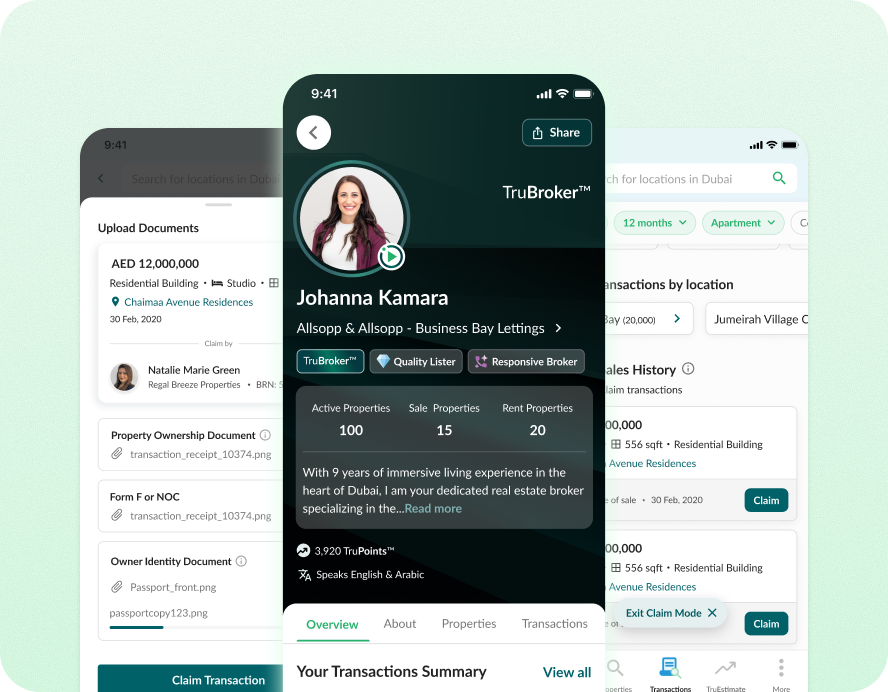
What I didLed the feature for scaling and testing it for the Bayut App
Team2 Product Managers(Web and App), 4 engineers, Operations and Data
TimelineHad multiple decision pivots from Q4 2024 - Q1 2025
Overview
Why do Agents need to claim transactions?
Dubai Transactions is one of our flagship product which sources all sale and rental property transactions data from Dubai Land Department (DLD) for our clients to make sound property decisions based on data.
Agents use this to show their clients the past data of their deals closed with clients and currently there was no way for any user to verify to see this in agents profile.
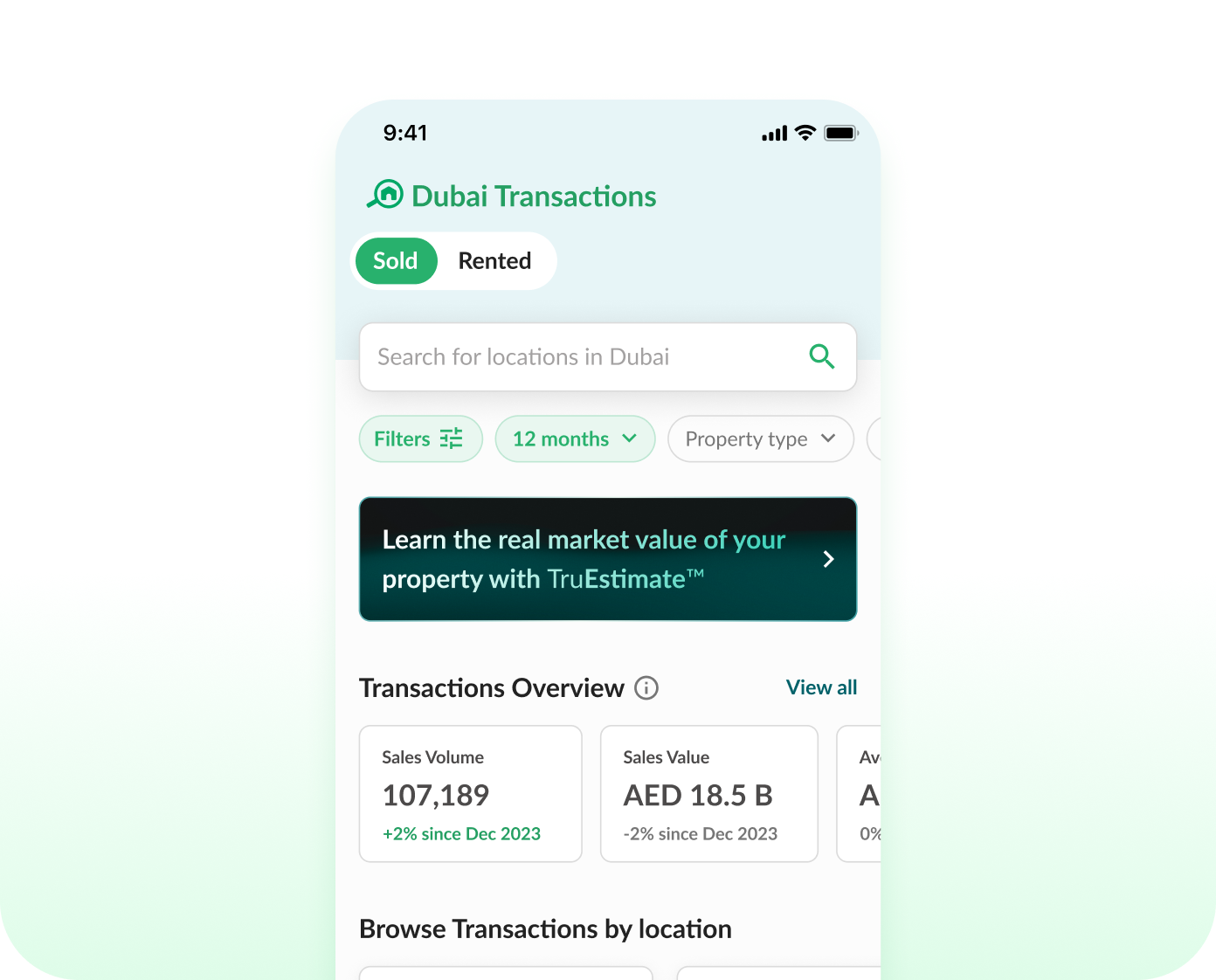
Why is it so important to us?

Improve Agent Credibility since the release of Dubai Transactions in Bayut, recording massive demand of transactions in the platform we need our investors, users to trust our agents.
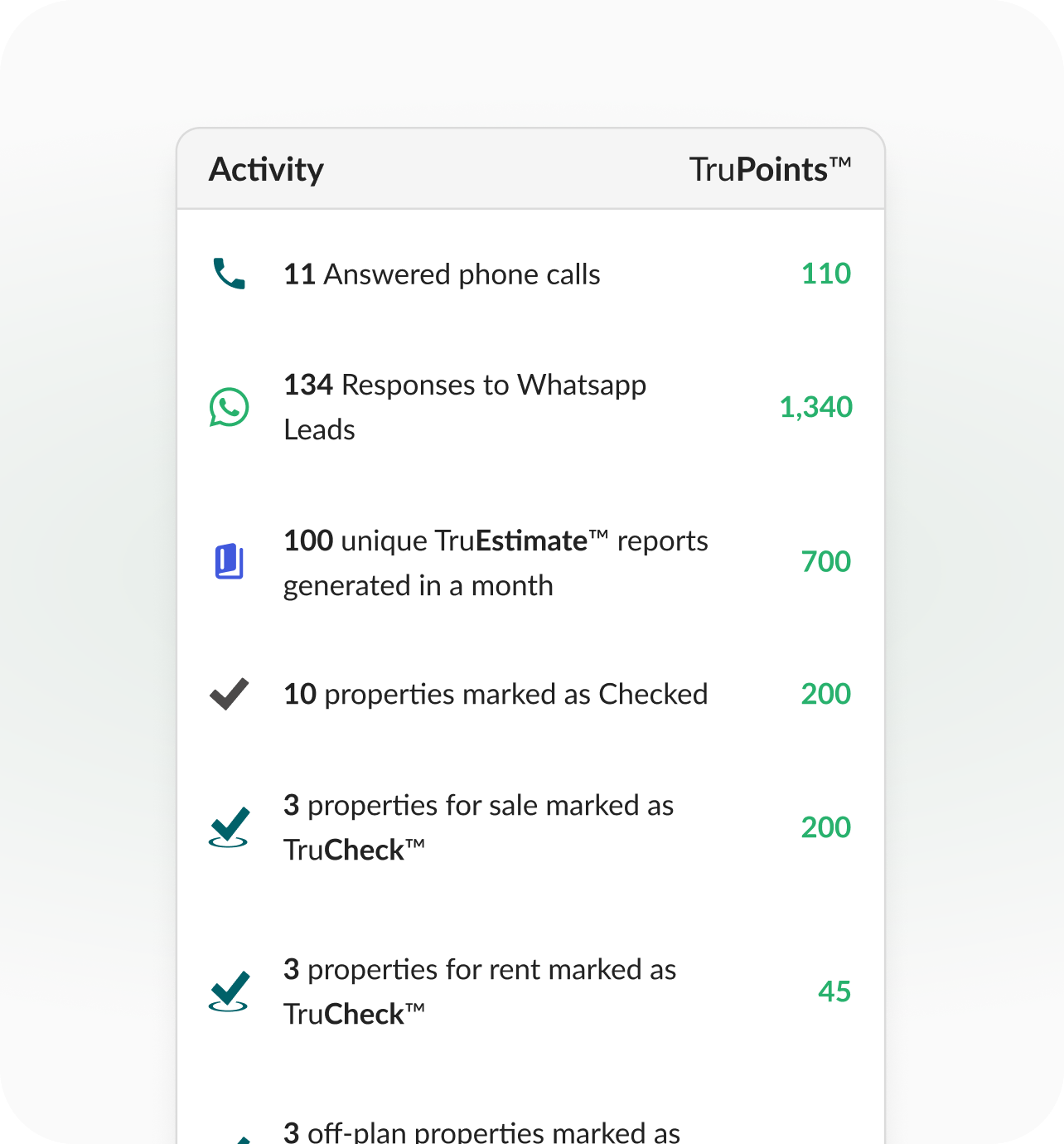
Scale TruBroker™ with connecting claim deals as credible point for gaining vote of confidence of their respective clients and earning the badge tied to getting more TruPoints.
Trust Sells Faster
“Since our platform makes revenue through B2B more visibility of these transactions through our agents means more trust investors will have on her agents, more competitive packages to retain them”
Process
Bringing Claim for Agents in Dubai Transactions
How do agents discover the claim actions
As a user they need to discover how to claim transactions.
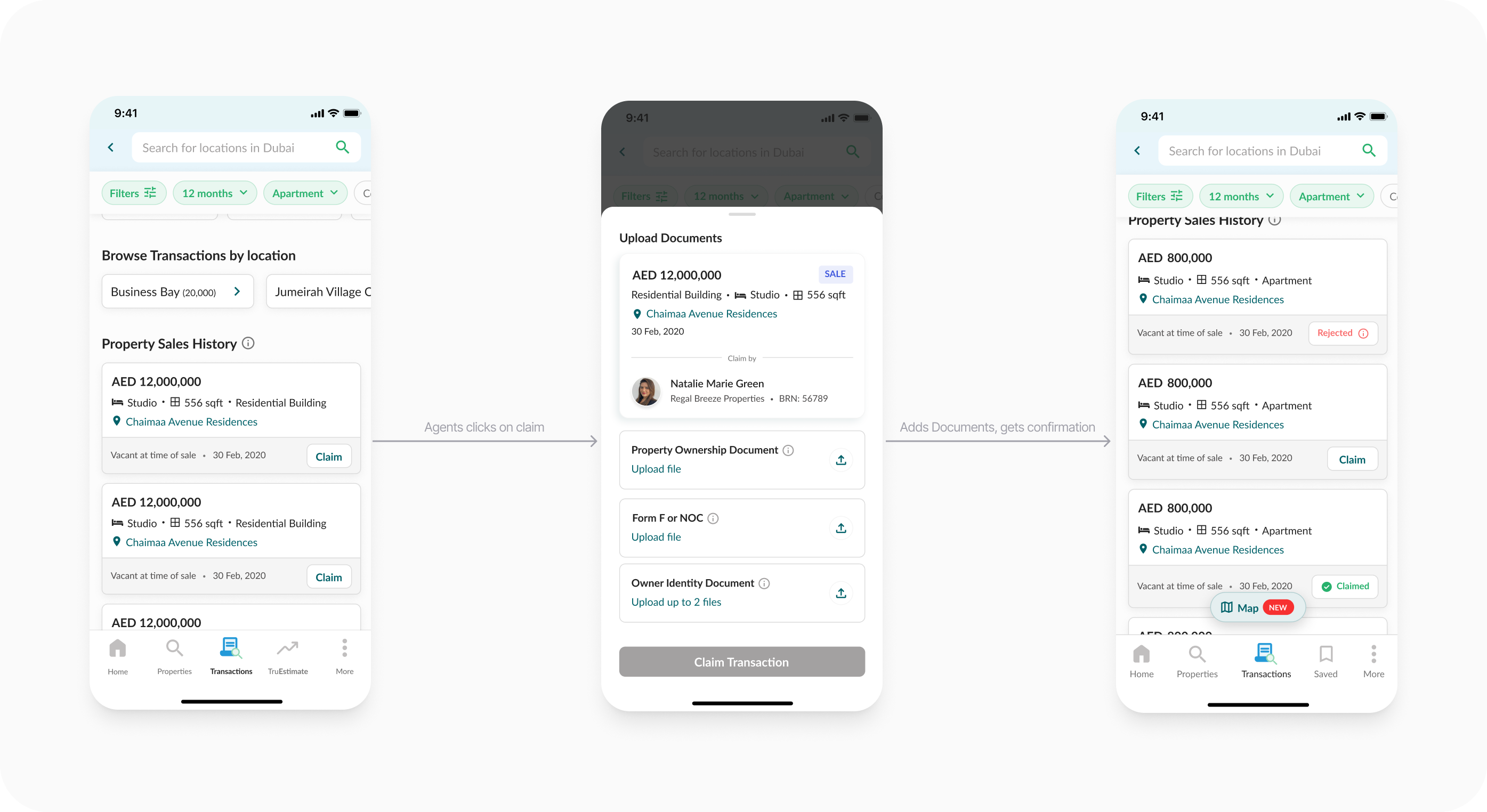
Document Uploading and View Status
What documents are required while claiming the transactions, and how do agents track status and their potential clients view them.
How can we retain with them and claim more
Since the release of TruBroker™ they could use TruPoints to gain more points with each claim for sale and rental transactions.
The First draft to claim for Agents
In the app data is intensive and screen real estate is small and deciding how do we break the current structure for our Agents and end users were crucial design decision.
Once that was done it was understanding how the agents would upload documents and understanding what the operations team each status would be and how these status would be shown to each agents.
Pivots
Flaws and Relearning the model
From some internal tests we and feedback we understood there were some fundamental issue in the how users discovers claim and track in the transactions in App.
Claim transactions and tracking their status are two different models that could cause a lot of confusions.
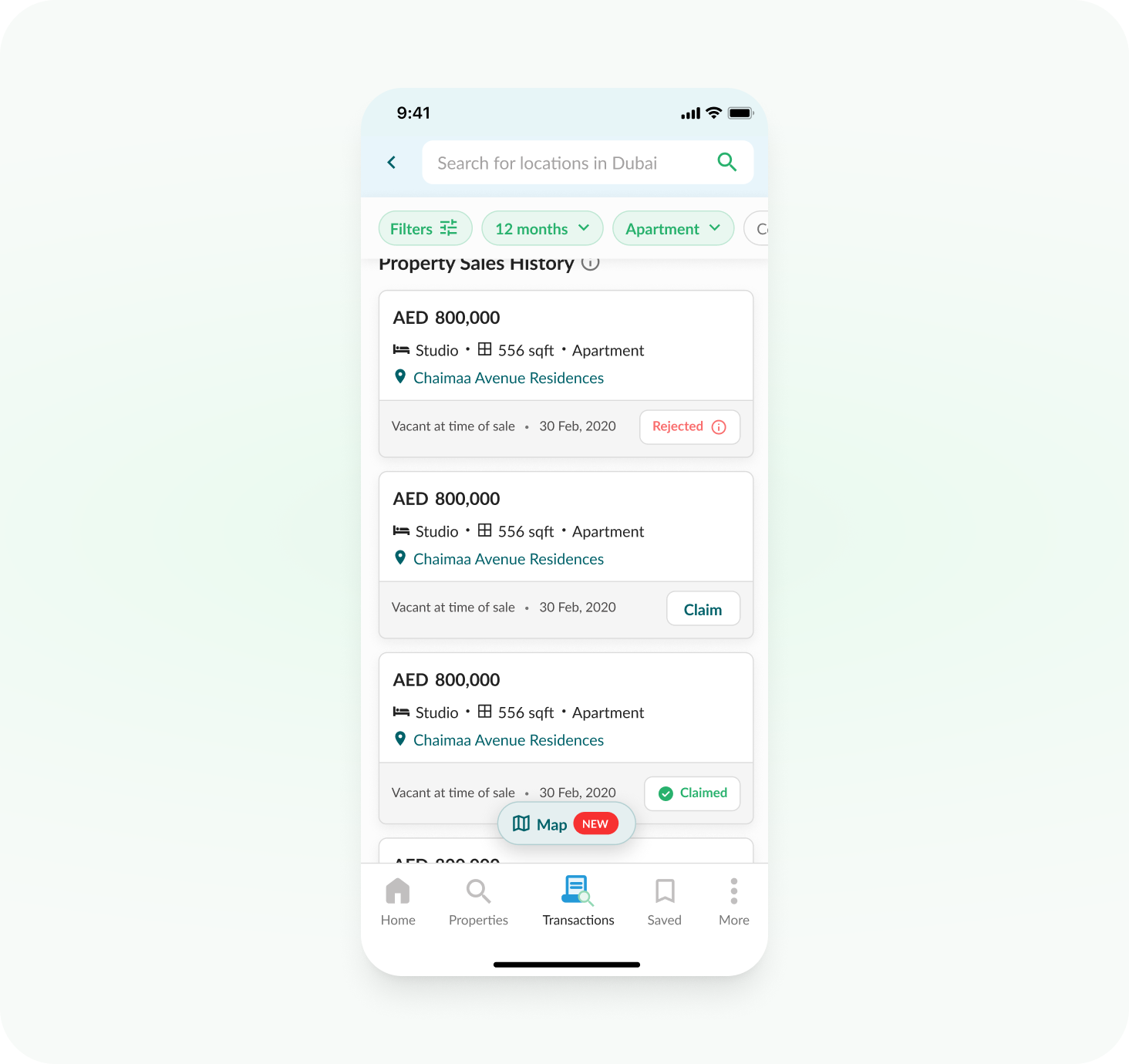
Claim and tracking the claim cannot co-exist
Allowing to claim and tracking it's status are two different models with internal tests we found out that there should be a way users can track them in a different section.
Persistent Button
While redesigning the card, since it would have been the most easiest way for a user to find the way how to claim a transaction, the mobile interface would get bloated with the data and a persistent.
Capitalise on Agent Profile
Since the release of TruBroker™ and Agent Profile we wanted to introduce a separate section for users to track the progress of their transactions, transaction amount and more details about them
Iterations
Transactions in Agent Profile
Agents could track and view their transactions status each one of these statuses and users could land on the Agents profile and view these transactions.
Claim as a mode
We wanted to reduce the cognitive load in the information and statuses for the Agents in Dubai Transactions section. We introduced it as a mode.
Upload documents and Track their status
Having discussions with PM and operations team we found out there could be some potential cases we might need to keep the users informed about.
Since we were pretty much aware of this from the start we needed to handle where will this best be accessible.
Enhancements
Post testing and Launch
Onboarding After testing with my teammate and product managers, few builds from the tech and feedbacks from the key stakeholders. We decided that since we decided to have a claim mode release show the user an onboarding to agents.
Documents with Password We saw a lot of agents experienced rejections due to some documents having security codes which are required and authorized by Dubai Land Department since these are confidential documents.
Bayut helped close this transactions Since a lot of leads comes from Bayut gathering data on these transactions and their value is a great way to position this feature to our client agents.
Impact
Market shift with Agents
Learnings
Building at Scale, across teams with Ownership
Design work does not ever finish after handoff or Design QA and we have to actively be part of conversations with different teams with pivots in decisions and operational requirements.
Ownership and Stakeholder and knowing when to let go while working with the product managers — the map view was not accounted for in the feature, and accounting for the feature's scale vs. timeline with the number of users on the map, keeping an inconsistent experience UX-wise was some compromises I learned to make.